What Tea Is Good for Heart Palpitations?
Which teas people use for heart palpitations, what the evidence actually shows, and when palpitations need a doctor's attention.
In this guide · 7 sections
Heart palpitations are the sensation of a fast, fluttering, or pounding heartbeat. They're usually harmless and often triggered by caffeine, stress, or dehydration — some calming, caffeine-free herbal teas may help with the anxiety that often comes with them, but tea isn't a treatment for an irregular heartbeat itself.
What Are Heart Palpitations?
The National Institutes of Health describes palpitations as sensations of a fast or irregular heartbeat. Most of the time this is temporary and not a cause for alarm, with common triggers including caffeine, stress, dehydration, and intense exercise. That said, palpitations that are frequent, prolonged, or paired with chest pain, dizziness, or shortness of breath need medical attention, not a home remedy.
Teas People Use for Palpitations
These teas are traditionally associated with a calming effect on the nervous system, which may indirectly ease stress-related palpitations. None of them treat an underlying heart rhythm problem.
Lemon Balm (Melissa) Tea
A mild, calming herbal tea traditionally used to ease nervous tension, which is one common trigger for palpitations.
Valerian Tea
Valerian has sedative properties and is traditionally used to calm anxiety and support sleep, which may help with palpitations that flare up under stress.
Hawthorn Tea
Hawthorn has a long history of traditional use for heart health, but NCCIH's evidence review describes the research on heart failure as conflicting and says there isn't enough evidence to know whether it helps with other heart conditions like abnormal heartbeat. It should not be used as a substitute for prescribed heart medication, and you should talk to a doctor before using it if you have a diagnosed heart condition, since case reports describe it falsely raising lab digoxin readings and interacting with cardiac drugs.
Hibiscus Tea
Hibiscus tea is associated with modest blood pressure benefits in some clinical research. Because it can lower blood pressure and has been shown to affect how the body processes some blood pressure drugs, check with your doctor before drinking it regularly if you take blood pressure medication.
Linden Tea
Linden is traditionally used to ease tension associated with stress, which may help with anxiety-driven palpitations, often paired with hawthorn.
Does Caffeinated Tea Cause Palpitations?
Caffeine is one of the more common everyday triggers for palpitations, and green and black tea both contain it. If you notice palpitations after caffeinated tea or coffee, cutting back is a reasonable first step. There's no single "safe" amount that applies to everyone — some people are far more sensitive to caffeine than others — so if this is a concern for you, talk to your doctor about a caffeine limit that makes sense for your health history rather than following a generic daily cup count.
When to See a Doctor
Talk to a doctor promptly if palpitations:
- happen frequently or last more than a few minutes;
- come with chest pain, dizziness, fainting, or shortness of breath;
- started after a new medication or supplement; or
- occur alongside a known heart condition, high blood pressure, or thyroid problem.
A doctor can check for an underlying cause with an EKG or other tests, which no herbal tea can substitute for.
Side Effects and Precautions
- Hawthorn can interact with heart medications, including digoxin and beta-blockers — don't use it without medical guidance if you're on cardiac medication.
- Valerian and lemon balm can add to the effects of sedatives, alcohol, and benzodiazepines, so avoid combining them without medical guidance.
- Hibiscus tea can lower blood pressure and may interact with blood pressure medication.
- If you're pregnant or breastfeeding, check with your doctor before drinking any of these herbal teas regularly.
FAQ
Is green tea good or bad for heart palpitations?
Green tea contains caffeine, a common palpitation trigger for sensitive people, so it can go either way depending on your individual tolerance. If you notice palpitations after drinking it, cut back or switch to a caffeine-free option.
Can herbal tea stop heart palpitations?
Calming herbal teas may ease the anxiety that often accompanies palpitations, but they don't treat an underlying heart rhythm issue. See a doctor if palpitations are frequent or severe.
What should I avoid if I get heart palpitations often?
Common triggers to watch include caffeine, alcohol, dehydration, and high stress. If palpitations continue despite avoiding these, get evaluated by a doctor.
The Bottom Line
Calming herbal teas like lemon balm, valerian, and linden may help with the stress that often accompanies heart palpitations, and hawthorn and hibiscus have some traditional and early research support for heart health more broadly — but none of them diagnose or treat an irregular heartbeat. Cut back on caffeine if it seems to trigger your palpitations, and see a doctor if they're frequent, prolonged, or paired with other symptoms. If stress is a trigger for you, see our guides to tea for anxiety and tea for stress; if blood pressure is also a concern, check out herbal teas and blood pressure.
Free printable
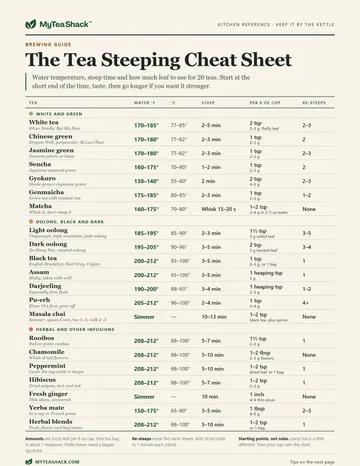
The Tea Steeping Cheat Sheet
Water temperature, steep time and how much leaf to use for 20 teas, from sencha to rooibos, on one printable page. Plus five fixes for a bitter cup.