Is Green Tea Safe During Pregnancy? Benefits and Risks
Is green tea safe to drink while pregnant? Learn how much is considered safe, the benefits and risks, and which teas to limit or avoid.
In this guide · 8 sections
Experts don't fully agree on this one. General pregnancy-caffeine guidance treats green tea like any other caffeinated drink and allows moderate amounts within the overall daily caffeine limit of about 200 mg, or roughly 3 to 4 cups. Some herb-safety resources are more cautious and recommend pregnant or breastfeeding women avoid green tea altogether because of its caffeine content. When in doubt, ask your OB-GYN or midwife what they recommend for you specifically.
Is Green Tea Good or Bad for Pregnant Women?
Diet takes on extra importance during pregnancy, and caffeine is one of the substances that comes up most often. Green tea sits in a middle ground: it has real benefits, but it also contains caffeine and compounds that can interfere with nutrient absorption if you drink too much of it.
Potential Benefits
- Green tea contains polyphenols, which are linked to better cardiovascular health.
- Its antioxidants may help protect cells from everyday oxidative stress.
- Staying hydrated with tea can ease common pregnancy discomforts like constipation and headaches.
Potential Downsides
- Green tea can affect how your body absorbs iron, which matters more if you're vegetarian, prone to anemia, or taking iron supplements — ask your doctor if you should space it out from meals or supplements.
- As a source of caffeine, it can act as a mild stimulant, which may make it harder to fall asleep, particularly later in pregnancy.
- Some studies suggest high caffeine intake during pregnancy may be linked to miscarriage, preterm birth or low birth weight, though the evidence is mixed — which is why the general advice is to cap total caffeine intake rather than eliminate tea outright.
Teas to Limit During Pregnancy
Because of their caffeine content, it's worth limiting black tea, oolong tea, pu-erh tea and green tea. Herbal blends containing St. John's wort, ginseng or yarrow are also generally discouraged during pregnancy, and chai (which is usually made with black tea) should be limited for the same reason.
Some herbal teas, like rosehip, don't have strong safety data for pregnancy one way or the other; if you're unsure about a specific herb, it's best to check with your doctor or midwife before drinking it regularly.
Green Tea and Breastfeeding
Caffeine passes into breast milk, so the same moderation applies while breastfeeding. If your baby seems unusually fussy or has trouble sleeping, cutting back on caffeinated tea and coffee is one of the first things to try.
Teas Generally Considered Safe in Pregnancy
Every pregnancy is different, and it's still worth checking with a healthcare provider before adding any new herbal tea to your routine. That said, these are commonly considered good options:
- Fennel and thyme: Naturally caffeine-free, and often used for digestive comfort.
- Rooibos: Caffeine-free and rich in antioxidants and minerals.
- Ginger: Widely used for morning sickness and nausea; also caffeine-free.
- Lemon balm, passionflower and orange blossom: Traditionally used for relaxation, in moderation.
Teas to Use With Caution
- Peppermint: Generally fine in small amounts, but some providers suggest limiting it, especially in early pregnancy.
- Chamomile: Often used for digestion and relaxation, but most guidance caps it at about 1–2 cups a day — see our full guide on chamomile tea safety during pregnancy.
If you want a caffeine-free option that skips this whole conversation, browse our list of caffeine-free teas, or check exactly how much caffeine is in green tea so you can track your daily total.
Side Effects and Precautions
- Limit total caffeine (from all sources, including coffee and soda) to about 200 mg per day.
- If you have a history of anemia or are managing your iron intake, avoid drinking tea with meals since it can reduce iron absorption.
- Always talk to your doctor before using any herbal tea or supplement during pregnancy, especially if you have a high-risk pregnancy or take medication.
Planning a pregnancy rather than already pregnant? See our guide to fertility teas for women.
FAQ
Can I drink green tea every day while pregnant?
Yes, most guidelines consider 3 to 4 cups a day (about 200 mg of caffeine) an acceptable upper limit, but check with your provider based on your individual situation.
Should I avoid green tea completely if I'm pregnant?
Not necessarily. Most general pregnancy-caffeine guidance allows moderate amounts of green tea within your daily caffeine limit, though some herb-safety resources recommend avoiding it altogether — ask your provider which approach makes sense for your pregnancy.
Is decaf green tea a safer option during pregnancy?
Decaf green tea still contains a small amount of caffeine (roughly 5–10 mg per cup) but is a reasonable way to cut back on total caffeine while still enjoying the flavor.
The Bottom Line
Green tea isn't off-limits during pregnancy, but it's a drink to enjoy in moderation rather than without limits. Stick to a few cups a day, prioritize teas made specifically for pregnancy, and check with your doctor about anything you're unsure of.
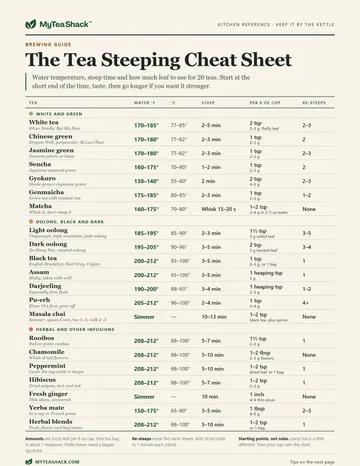
Free printable
The Tea Steeping Cheat Sheet
Water temperature, steep time and how much leaf to use for 20 teas, from sencha to rooibos, on one printable page. Plus five fixes for a bitter cup.