Is It Healthy to Drink Tea Every Morning?
Find out if drinking tea every morning is healthy, which teas work best for a morning boost, and how they compare to coffee.

We may earn a commission when you buy through links in this guide, at no extra cost to you. How we make money.
In this guide · 6 sections
Yes, drinking tea every morning is healthy for most people. It pairs a gentle dose of caffeine with antioxidants and, unlike coffee, tends to bring on energy more gradually, which is why so many people use it as a breakfast staple.
Why Morning Tea Works
A good breakfast sets the tone for your energy and focus the rest of the day. Tea fits naturally into that routine: its caffeine (often called theine when it comes from tea, though it's the same compound) helps you feel more alert. An 8 oz cup of black tea has roughly 50 mg of caffeine versus about 100 mg for coffee, so tea tends to bring on a gentler lift with less of a jittery crash.
For a stronger breakfast overall, pair your cup with protein and fiber, such as eggs, plain yogurt, or oats, and go easy on refined carbs, added sugar, and processed meats. Skipping breakfast entirely tends to hurt both mood and focus later in the day, so a cup of tea alongside real food beats an empty stomach.
Best Teas for the Morning
- Black tea. The most caffeinated true tea, and a strong stimulant to start the day. Some randomized trials link regular black tea intake to modestly lower LDL cholesterol, though results across studies are mixed.
- Green tea. Slightly less caffeine than black tea, plus a mild diuretic effect and high antioxidant content.
- Oolong tea. A middle ground between green and black tea, with less caffeine and a smooth, distinctive aroma — good after a heavy dinner the night before.
- Chai tea. A robust, spiced black tea blend that many people find sharpens concentration.
- Yerba mate. A caffeinated South American infusion rich in vitamin C and minerals like calcium, magnesium, and potassium.
- Ginseng tea. Often used as a natural pick-me-up; small studies suggest Asian ginseng may improve subjective mental fatigue and some aspects of cognitive performance, though the evidence is still limited.
- Rosemary tea. An herbal, caffeine-free option some people use to feel more alert, though evidence for this effect is limited.
- Earl Grey tea. Black tea scented with bergamot; enough caffeine for a morning lift while staying gentle enough to enjoy later in the day too.
How to Brew a Morning Cup
- Bring fresh water to the right temperature: a rolling boil for black tea and chai, just off the boil (about 195°F) for oolong, and slightly cooler (175–185°F) for green tea.
- Use about 1 teaspoon of loose tea (or one bag) per 8 oz cup.
- Steep black tea and chai for 3–5 minutes, oolong for 2–3 minutes, and green tea for 2–3 minutes to avoid a bitter cup.
- Strain, and add milk, honey, or lemon if you like — black tea and chai pair especially well with milk.
If you tend to forget breakfast, brewing tea first can double as a reminder to make time for something to eat alongside it, which helps avoid the mild stomach upset caffeine can cause on an empty stomach.
Side Effects and Precautions
- Caffeinated teas (black, green, oolong, yerba mate) can cause jitteriness, insomnia, or an upset stomach if you drink too much, especially later in the day.
- Most healthy adults do fine with 2–3 cups a day; if you're sensitive to caffeine, stick to fewer or switch to a caffeine-free herbal option.
- Talk to your doctor about tea intake if you're pregnant or breastfeeding, since caffeine crosses to the baby.
- If you take medication or have a heart condition, ask your doctor before adding a new caffeinated tea to your routine.
Not sure which tea to pick? Our list of the best morning teas compares ten options by caffeine and flavor. For the rest of the day, see how to build an everyday tea time routine.
FAQ
Is tea better than coffee in the morning?
Tea generally has less caffeine than coffee, so it tends to produce a gentler, longer-lasting lift with less of a crash. Which is "better" really comes down to personal preference and caffeine tolerance.
Can I drink tea on an empty stomach?
Some people find that black or green tea on an empty stomach causes mild nausea or stomach discomfort because of its tannins. Having tea alongside food usually solves this.
Is it OK to drink caffeinated tea instead of water in the morning?
Tea does count toward your fluid intake, but it shouldn't be your only source of hydration. Have a glass of water too, especially before or after a caffeinated drink.
The Bottom Line
A cup of tea is a healthy, flexible way to start the day, whether you want an energizing black or green tea or a calmer herbal option. Pair it with a real breakfast, keep caffeinated varieties to a moderate amount, and pick the type that matches how you want to feel that morning.
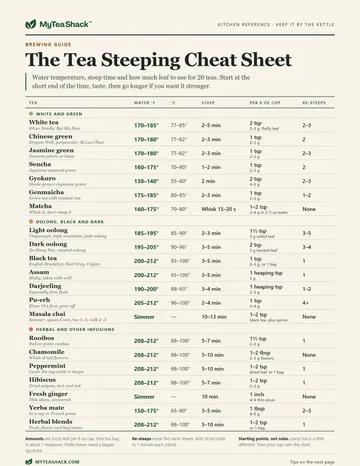
Free printable
The Tea Steeping Cheat Sheet
Water temperature, steep time and how much leaf to use for 20 teas, from sencha to rooibos, on one printable page. Plus five fixes for a bitter cup.