Types of Black Tea: Varieties, Origins and Flavors
A guide to the main types of black tea, from Assam and Darjeeling to Lapsang Souchong, plus their flavors, caffeine and benefits.
In this guide · 8 sections
Black tea comes in many regional varieties, all made from the same Camellia sinensis plant but shaped by where it's grown and how it's processed. What sets black tea apart from green, white or oolong is the degree of oxidation: black tea leaves are fully oxidized, giving them their dark color and bold, malty flavor.
Tea From India
Assam Tea
Grown in the Assam region, this is one of the strongest and maltiest black teas. It's often used as a base for English Breakfast blends and pairs well with milk if you find it too intense on its own.
Darjeeling Tea
Known as "the Champagne of black tea" for its light, aromatic profile, Darjeeling is grown in the hills of West Bengal. It's less astringent than Assam and often has floral or muscatel notes.
Nilgiri Tea
Grown in the Tamil Nadu, Karnataka and Kerala hills, Nilgiri tea has a dark, aromatic, intensely flavored brew that blends well with other teas.
Kangra Tea
Grown at high altitude (900–1,400 meters) in a small production region, Kangra tea has a softer, fruitier taste and fuller body than Darjeeling.
Tea From China
Lapsang Souchong
A smoked black tea from Fujian Province, Lapsang Souchong has a distinctive campfire aroma and is a key ingredient in blends like Russian Caravan.
Yunnan Tea
Grown in one of China's major tea-producing regions, Yunnan black teas ("Yunnan Gold") are known for their golden tips and smooth, malty character.
Keemun Tea
Produced in Anhui province, Keemun is prized for its slightly smoky, spicy notes with a sweet, raisin-like finish.
Dian Hong Tea
Also from Yunnan, Dian Hong is known for its malty flavor and golden-orange liquor.
Blends and Regional Styles
English Breakfast
A robust blend, often built on Assam, traditionally taken with milk and sometimes sugar.
Irish Breakfast
Usually built around Assam as well, with a stronger, maltier profile than English Breakfast; typically drunk on its own rather than blended further.
Masala Chai
Black tea combined with warming spices like cardamom, cinnamon, ginger and cloves. Its bold base flavor holds up well against the spice blend.
Ceylon Tea
Grown in Sri Lanka (formerly Ceylon), this tea has a brisk, bright character with notes of citrus and sometimes chocolate.
How Black Tea Is Made
After picking, the leaves are withered to reduce moisture, then rolled or cut to break their cell walls. This exposes them to oxygen and triggers full oxidation, which produces two key groups of compounds: theaflavins (bright, brisk-tasting) and thearubigins (softer, rounder). The leaves are then dried, sorted and packaged. This process typically takes 12–20 hours from wilting to drying.
Black Tea Benefits
Black tea shares many of the same antioxidant compounds as other true teas, along with its own unique theaflavins. Clinical trials and meta-analyses suggest it may modestly support healthy blood pressure and cholesterol and help keep arteries flexible, though results across studies are inconsistent and much of the underlying mechanism research is in cells or animals rather than large human trials. It's also a good source of fluoride, which may support dental health.
Side Effects and Precautions
- Black tea contains caffeine (roughly 50–90 mg per cup); more than 3–4 cups a day can cause headaches, sleep disruption or jitteriness in sensitive people.
- Pregnant or breastfeeding women should limit caffeine intake and talk to a doctor about a safe daily amount.
- Black tea's tannins can reduce iron absorption from food; if you're managing iron deficiency, drink it between meals rather than with them.
Any of these can be brewed with citrus; here's how to make black tea with lemon.
FAQ
Is it bad to drink black tea every day?
No, moderate daily consumption (2–3 cups) is fine for most healthy adults. Drinking more than that regularly can bring on caffeine-related side effects like headaches or sleep trouble.
Which type of black tea has the most caffeine?
Assam tends to be one of the stronger, higher-caffeine black teas, though exact content varies by brand and brewing method.
What's the best time of day for black tea?
Morning or early afternoon, since its caffeine content can interfere with sleep if drunk too close to bedtime.
The Bottom Line
Black tea's many regional varieties share a full-oxidation process but differ widely in flavor, from Assam's malty strength to Darjeeling's delicate florals. Pick a variety based on taste and caffeine tolerance, and keep intake moderate to avoid caffeine-related side effects. To compare it with other tea types, see black tea vs green tea and the power of black tea, or check white tea caffeine content for a lower-caffeine comparison.
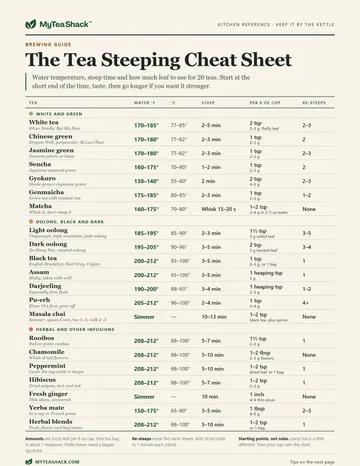
Free printable
The Tea Steeping Cheat Sheet
Water temperature, steep time and how much leaf to use for 20 teas, from sencha to rooibos, on one printable page. Plus five fixes for a bitter cup.