Red Raspberry Leaf Tea and Fertility: What to Know
Red raspberry leaf tea is a traditional pregnancy and fertility tea. Here's what the evidence actually shows, plus side effects and how to brew it.
In this guide · 6 sections
Red raspberry leaf tea has a long history of traditional use to support reproductive health, from easing menstrual cramps to preparing the body for labor. Some of these uses have modest research support; others are based mainly on tradition. Here's what's actually known.
What's in Red Raspberry Leaf Tea
Raspberry leaves contain antioxidant compounds including ellagic acid, flavonoids, and tannins, along with fragarine, a compound traditionally associated with toning uterine muscle. The leaves also contribute vitamin C, calcium, magnesium, potassium, and iron, though as with any herbal tea, the amount you actually absorb from a brewed cup is modest compared to a concentrated supplement. The tea is naturally caffeine-free.
What the Research Says
Labor and Delivery
The best-studied use of red raspberry leaf tea is in later pregnancy. A retrospective study of 108 women who took raspberry leaf in various forms (including tea) found they were more likely to have an unassisted vaginal birth and less likely to need a cesarean, and a later randomized trial of 192 women found a lower, but not statistically significant, rate of instrumental delivery in the raspberry leaf group. Other small randomized trials found a modestly shorter second stage of labor (pushing phase) in women who took raspberry leaf late in pregnancy, but a later controlled trial found no significant difference from placebo on labor outcomes. Overall, the evidence is small-scale and mixed, suggestive rather than conclusive, and larger, more rigorous trials are still needed.
Menstrual Cramps
Some people use raspberry leaf tea to ease menstrual cramps, based on its traditional use as a uterine tonic. Evidence specific to this use is limited but the tea is generally considered low-risk for healthy adults outside of pregnancy.
Fertility
Red raspberry leaf tea is traditionally associated with fertility support, but there's no solid clinical evidence that it improves the chances of conceiving. If you're exploring fertility-focused teas, see our broader roundup of fertility teas for women for what's actually been studied.
Milk Supply While Breastfeeding
It's sometimes used as a galactagogue (a substance believed to support milk production), but scientific support for this specific effect is limited. If milk supply is a concern, talk to a lactation consultant or your doctor about evidence-based options.
Side Effects and Precautions
- Early pregnancy: Most midwives and herbalists recommend waiting until the third trimester to start raspberry leaf tea, since its effects on uterine muscle are traditionally considered better suited to preparing for labor rather than earlier pregnancy.
- Who should avoid it: because of its uterotonic effect, raspberry leaf tea is generally advised against with a history of preterm labor or risk of preterm birth, high blood pressure during pregnancy, placenta previa or unexplained bleeding, a multiple pregnancy (twins or more), or a scheduled cesarean section.
- Gestational diabetes or blood sugar medication: There isn't strong human evidence on how raspberry leaf tea interacts with blood sugar control, so if you have gestational diabetes or take blood-sugar-lowering medication, talk to your doctor before trying it.
- Common mild effects: Some people experience nausea, loose stools, or more noticeable Braxton Hicks contractions.
- Always consult your doctor or midwife before using raspberry leaf tea during pregnancy, and stop if you notice any unusual symptoms.
How to Make Red Raspberry Leaf Tea
Ingredients:
- 1 teaspoon dried, crushed raspberry leaves per cup of water
- Filtered water
Instructions:
- Bring water to a boil.
- Pour over the raspberry leaves and let steep for 5 minutes.
- Strain and enjoy hot, or chill for an iced version.
FAQ
Does red raspberry leaf tea induce labor?
No — it isn't a labor-induction method. Traditional use is about toning uterine muscles in the weeks before labor, not triggering contractions to start it, and it shouldn't be used to try to self-induce.
When should I start drinking red raspberry leaf tea in pregnancy?
Many midwives suggest starting in the third trimester, but talk to your OB-GYN or midwife about timing based on your individual pregnancy.
Does red raspberry leaf tea have caffeine?
No, it's naturally caffeine-free.
Is red raspberry leaf tea safe if I'm not pregnant?
Generally yes, in moderate amounts — many people drink it for its antioxidant content or to help with menstrual cramps. If you're also curious about other pregnancy-related teas, see our complete guide to teas during pregnancy.
The Bottom Line
Red raspberry leaf tea has the most support for use in late pregnancy, where it may help shorten labor and reduce the need for interventions, though more research is needed. Claims about fertility and early pregnancy use are less supported — talk to your doctor or midwife before adding it to your routine.
This post may contain affiliate links. If you buy through them, we may earn a small commission at no extra cost to you.
Free printable
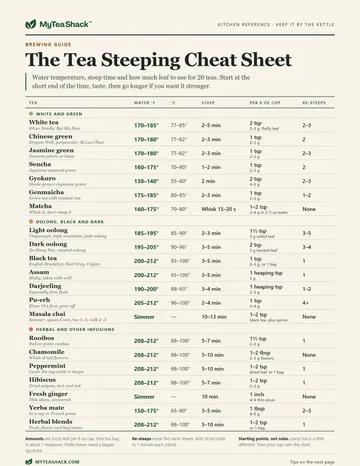
The Tea Steeping Cheat Sheet
Water temperature, steep time and how much leaf to use for 20 teas, from sencha to rooibos, on one printable page. Plus five fixes for a bitter cup.