What Is Assam Milk Tea? Flavor, Benefits and How to Brew
What Assam milk tea is, how it's made, its caffeine and antioxidant content, possible benefits and side effects, and how to brew it at home.
In this guide · 7 sections
Assam milk tea pairs strong, malty Assam black tea with milk, making it one of the most popular breakfast teas in the world. Here's what makes Assam tea distinct, what the research actually shows, and how to brew a cup at home.
What Is Assam Tea?
Assam tea is a black tea made from Camellia sinensis var. assamica, grown in the Assam region of northeastern India, one of the largest tea-producing areas on earth. It's known for a full-bodied, malty flavor with light floral notes and a naturally high caffeine content, which is why it's a staple in English and Irish breakfast blends.
After harvesting, Assam leaves are withered and fully oxidized, a process that develops their dark color and bold flavor.
Assam Milk Tea Benefits
Adding milk mellows Assam's naturally strong, astringent flavor, which is why it's traditionally served with milk at breakfast. A few practical benefits of the milk itself:
- May protect tooth enamel. Research from the University of Alberta's School of Dentistry found that casein, a milk protein, binds to tea's tannins and can reduce how much tea stains teeth.
- More filling. The combination of tea and milk can feel more satiating than tea alone, which some people find useful for a mid-morning pick-me-up.
- Milder flavor. Milk softens Assam's bold, tannic edge, making it more approachable for people who find straight black tea too strong.
Keep in mind that milk does reduce the concentration of some antioxidants in the tea, so if you want the maximum antioxidant benefit, drink it black or with just a splash of milk.
Assam Black Tea and Health
Assam tea contains antioxidant plant compounds, including catechins and theaflavins, which help the body counter everyday oxidative stress. Some additional findings from research on black tea generally:
- Cardiovascular health. Some human studies, including a randomized trial in adults with mildly elevated cholesterol, have found that regular black tea drinking modestly lowers total and LDL ("bad") cholesterol; other trials have found smaller or no effect, so results are mixed rather than guaranteed.
- Brain health. Some early research has looked at whether black tea compounds could support brain health as people age, including possible effects on the enzymes involved in Alzheimer's disease. This research is preliminary, done mostly in lab and animal studies, and shouldn't be read as evidence that Assam tea prevents or treats any brain disease.
- Cancer and Parkinson's research. A small number of population studies have observed associations between regular tea consumption and lower rates of certain cancers and Parkinson's disease. These are observational findings, not proof that tea prevents these conditions, and shouldn't replace medical care or screening.
Side Effects and Precautions
Caffeine. Assam is one of the higher-caffeine teas. Most healthy adults tolerate up to about 400 mg of caffeine a day without issues, but excessive intake can cause a rapid heartbeat, anxiety, or insomnia. If you're pregnant, most guidelines suggest limiting caffeine to around 200 mg a day — talk to your doctor about what's right for you.
Metals. Like most tea, Assam can contain trace amounts of naturally occurring metals such as aluminum. This isn't generally considered a health concern for typical tea drinkers, but people with kidney disease should discuss tea intake with their doctor.
How to Make Assam Milk Tea
- Use about 2–2.5 grams of loose Assam tea (roughly one heaping teaspoon) per cup.
- Heat water to 176–194°F.
- Steep for 3–5 minutes.
- Strain into a cup and add milk and honey or sugar to taste.
- Assam leaves can typically be re-steeped once more.
Related: the health benefits of black tea.
FAQ
Is Assam milk tea good for you?
In moderation, yes — it offers antioxidants and a satisfying, lower-sugar alternative to many coffee drinks, though its caffeine content means it's not ideal right before bed.
What's the difference between Assam tea and regular black tea?
Assam is a specific variety of black tea grown in India's Assam region, known for a stronger, maltier flavor and higher caffeine content than many other black teas.
When is the best time to drink Assam milk tea?
Morning or early afternoon, with or after a meal, works well given its caffeine content.
The Bottom Line
Assam milk tea is a bold, satisfying breakfast drink with real antioxidant content, but keep the stronger disease-prevention claims in perspective — think of it as a flavorful daily habit, not a treatment. If you're comparing black teas, see our guides to Earl Grey tea and the different types of black tea, or learn more about why milk makes tea better.
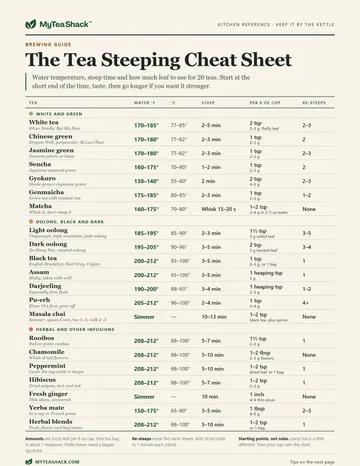
Free printable
The Tea Steeping Cheat Sheet
Water temperature, steep time and how much leaf to use for 20 teas, from sencha to rooibos, on one printable page. Plus five fixes for a bitter cup.