What Is Pu-erh Tea Good For? Benefits and Side Effects
What Pu-erh tea is, what research says about its potential benefits, side effects, and how to brew it correctly.
In this guide · 6 sections
Pu-erh tea is an aged, fermented tea from the Yunnan region of China, prized the way some people prize aged wine or whiskey. It's made from the same Camellia sinensis plant as green, black, and oolong tea, but its unique fermentation process gives it a darker color, softer taste, and different chemical profile. Our guide to the main types of tea explains where it fits.
What Makes Pu-erh Different
Pu-erh is made from the leaves of older tea trees, which are dried and then allowed to ferment — a process that transforms the tea's flavor into something smoother, earthier, and richer the longer it ages. Unlike most teas, which are prized fresh, Pu-erh is often deliberately aged for years.
In the West, it's sometimes called "red tea" because of its color, though it shouldn't be confused with rooibos (also called red tea), which is a different, caffeine-free plant entirely. The tea itself contains polyphenols, theophylline, caffeine and fiber, along with B vitamins, vitamin C and minerals including magnesium, potassium and zinc.
Potential Benefits of Pu-erh Tea
Traditional Chinese medicine has long used Pu-erh for its perceived health effects, and modern research has looked into a few of these claims — though much of it is still preliminary:
- Antioxidants. Like other true teas, Pu-erh contains polyphenols such as catechins and theaflavins, which have antioxidant properties.
- Cholesterol. Some studies link Pu-erh tea to modestly lower LDL ("bad") cholesterol, a risk factor for heart disease.
- Weight management. A small number of short human trials have looked at Pu-erh tea and body weight, with some reporting a modest reduction in body mass index after regular use for several weeks. The research is limited to a few small studies, so it shouldn't be taken as proof that Pu-erh tea causes weight loss on its own.
- Antibacterial activity. Lab studies have found that certain phenolic compounds in Pu-erh have antibacterial and antiviral effects, but this doesn't mean the tea can replace antibiotics or treat an infection.
- Digestion. Traditionally, Pu-erh is drunk after meals in China to help settle the stomach.
- Lower caffeine than coffee. Pu-erh's fermentation process is associated with somewhat lower caffeine content than green tea, and tea in general has considerably less caffeine than coffee, roughly 14–60 mg per 8-ounce cup of tea versus 95–200 mg for coffee, which may make it a gentler alternative for people sensitive to caffeine, though this varies by product and steeping method.
- Bone health. Tea drinking in general, including Pu-erh, has been associated in some studies with better bone density, though Pu-erh itself is not a proven treatment for osteoporosis.
Some early lab research has looked at Pu-erh compounds and cancer cells, but this work is preliminary, conducted in cell cultures rather than in people, and far from establishing any role in cancer prevention or treatment. Pu-erh tea is not a treatment for cancer or any other disease.
Side Effects and Who Should Avoid It
Pu-erh contains caffeine — typically less than coffee, but enough to cause issues for some people:
- May cause jitteriness, a rapid heartbeat, or trouble sleeping if you're sensitive to caffeine.
- Not recommended in large amounts during pregnancy; talk to your doctor about safe caffeine limits.
- May interact with certain medications — check with your doctor if you take prescription drugs regularly.
- People with high blood pressure or a heart condition should discuss caffeine intake with their doctor.
- Liver conditions: concentrated tea extracts, not brewed tea, have rarely been linked to liver injury. Moderate intake of brewed Pu-erh isn't a known concern for most healthy adults, but talk to your doctor if you have existing liver disease.
Most healthy adults tolerate a few cups a day without issue, but pay attention to how your body responds.
How to Brew Pu-erh Tea
Pu-erh takes hotter water and more re-steeps than most teas; see how it compares in our tea steeping times chart.
- Heat water to about 205°F (just below boiling).
- Rinse the leaves briefly with hot water and discard that first rinse — a common step for aged teas that helps open the leaves.
- Steep to taste, then strain and enjoy. Pu-erh can often be re-steeped several times, with the flavor evolving each round.
Western method: use about 3 grams of tea per 200 ml of water at 195–205°F, and steep for 4–5 minutes.
Gongfu (Eastern) method: use 5–7 grams of tea per 100 ml of water at a near boil. Steep briefly, 15–25 seconds per infusion, and re-steep the same leaves several times, this method is traditional for Pu-erh and can yield many cups from one batch of leaves.
Related guides: blue tea (oolong) benefits and side effects and Chinese teas for weight loss.
FAQ
Is Pu-erh tea the same as red tea (rooibos)?
No. Pu-erh is sometimes nicknamed "red tea" in the West because of its color, but rooibos is a separate, caffeine-free South African plant.
How much Pu-erh tea can I drink a day?
Most healthy adults can enjoy a few cups a day. If you're sensitive to caffeine, pregnant, or managing a heart or blood pressure condition, check with your doctor about a safe amount.
Does Pu-erh tea really help with weight loss?
Some early research suggests a modest effect, but it's not a substitute for a balanced diet and regular exercise.
How much caffeine does Pu-erh have?
Generally less than black or green tea, though this varies by product, growing conditions and steeping method.
The Bottom Line
Pu-erh tea is a genuinely unique, fermented true tea with some promising — if still limited — research behind its cholesterol and weight-management effects. Enjoy it as part of a healthy routine, and check with your doctor if you're pregnant, sensitive to caffeine, or managing a heart condition.
For more on true teas, see our guides to black tea vs. green tea, caffeine-free tea, and teas for blood circulation.
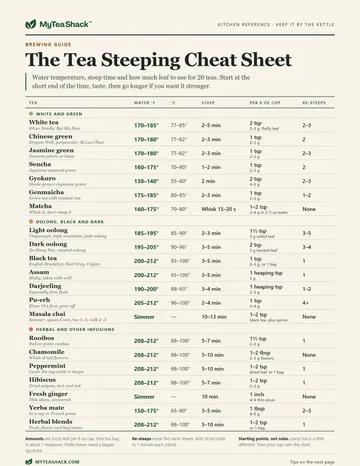
Free printable
The Tea Steeping Cheat Sheet
Water temperature, steep time and how much leaf to use for 20 teas, from sencha to rooibos, on one printable page. Plus five fixes for a bitter cup.