How to Make Tea Blends: A Simple DIY Guide
How to make your own tea blends at home, which base teas pair with which flavors, and a few starting combinations to try.
In this guide · 5 sections
Blending your own tea is easier than it sounds, and it lets you build a cup around exactly what you're in the mood for. Here's how tea blends work, how to build your own, and a few pairings to start with.
What Are Tea Blends?
A tea blend combines a base tea — black, green, white, oolong, pu-erh, or rooibos — with other ingredients like dried fruit, flowers, spices, or botanicals. Some of the world's best-known blends started this way: Earl Grey, for example, is simply black tea infused with bergamot oil.
Different base teas pair naturally with different add-ins:
| Base Tea | Pairs Well With |
|---|---|
| Black tea | Spices, dried fruit, citrus peel |
| Green tea | Jasmine, toasted rice, citrus |
| White tea | Light fruit, rose petals |
| Pu-erh | Chrysanthemum, ginger, warming spices |
| Rooibos | Orange peel, vanilla, cinnamon |
How to Make Your Own Tea Blend
- Decide on a mood. Relaxing, energizing, comforting, or festive — this shapes your ingredient choices.
- Pick your base tea. This will make up the largest share of your blend. Black tea gives a stronger, bolder cup; green or white tea gives something lighter.
- Add a secondary ingredient in a smaller amount. Dried fruit, flower petals, or a spice that complements your base.
- Layer in accents. Add a third or fourth ingredient in even smaller amounts — think of it as building a pyramid, with the base tea as the widest layer and each accent smaller than the last.
- Taste and adjust. Brew a small test cup before committing to a full batch. It's easier to add more of an ingredient than to take it out.
- Store properly. Keep your finished blend in an airtight container away from light and heat.
For measuring, use about 2 teaspoons (roughly 10 g) of blended tea per cup, or the same amount per tea bag if you're bagging your own.
Blend Ideas to Try
- Citrus black tea: black tea base with orange peel and a touch of cinnamon.
- Berry green tea: green tea base with dried blueberries and a hint of lemon.
- Spiced rooibos: rooibos base with cinnamon, clove, and a small amount of dried orange peel — naturally caffeine-free.
- Floral white tea: white tea base with rose petals and dried white fruit.
For a blend that doubles as a centerpiece, look at flowering teas.
FAQ
How much loose leaf should I use per cup?
About 2 teaspoons (roughly 10 g) of your finished blend per cup of water is a good starting point.
Can I blend tea with fresh fruit?
Fresh fruit adds moisture and can shorten shelf life. For a blend you plan to store, dried fruit works better; add fresh fruit directly to your cup instead.
What's the easiest tea to start blending with?
Black tea is forgiving and pairs with almost anything, which makes it a good base for a first attempt.
Does blending change the caffeine content of a tea?
Only slightly, and mainly based on how much base tea you use relative to other ingredients. If you want caffeine-free, start with a rooibos or herbal base.
The Bottom Line
Making your own tea blend is a low-cost way to customize your cup exactly to your taste, and there's no strict rulebook beyond pairing a base tea with complementary flavors in the right proportions. Start with small test batches, keep notes on what worked, and adjust from there.
For more inspiration, see our guides to blending teas, wild berry hibiscus tea, and milk tea.
Free printable
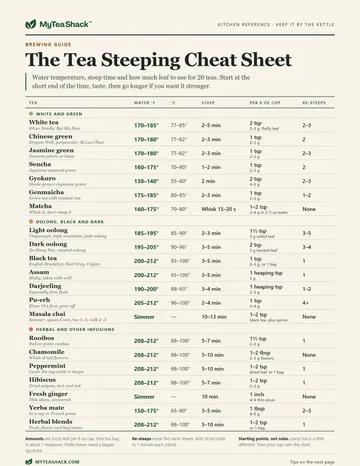
The Tea Steeping Cheat Sheet
Water temperature, steep time and how much leaf to use for 20 teas, from sencha to rooibos, on one printable page. Plus five fixes for a bitter cup.