Green Rooibos Tea: Benefits, Side Effects, How to Brew
Discover what makes green rooibos different from red rooibos, its potential health benefits, side effects, and how to brew it at home.
In this guide · 6 sections
Green rooibos is an unfermented version of South Africa's popular red rooibos tea. It has a fresher, slightly tangy taste, contains no caffeine, and, because it skips the fermentation step, retains more of its natural antioxidants than the red variety.
Green Rooibos vs. Red Rooibos
Both come from the same plant, but green rooibos is dried immediately after harvest instead of being left to ferment. Fermentation is what turns rooibos red and mellows its flavor; skipping it keeps green rooibos' polyphenol and tannin content higher, along with more of its natural vitamin C. The more careful, labor-intensive process also makes green rooibos slightly more expensive than red.
Potential Benefits of Green Rooibos Tea
Rooibos is well studied for a caffeine-free herbal tea, though much of the research is still preliminary. Here's what's generally understood:
- Rich in antioxidants: green rooibos is especially high in antioxidants, which help protect cells from oxidative stress linked to aging and various chronic conditions.
- May support digestion: it's traditionally used to ease occasional stomach discomfort, including bloating and mild digestive upset.
- Naturally caffeine-free: since it has no theine, it can be enjoyed any time of day, including in the evening.
- May support relaxation: rooibos contains magnesium and is often used as a calming, caffeine-free evening drink.
- Mineral content: it provides iron, calcium, magnesium, manganese, potassium, and zinc.
- May support healthy blood pressure: rooibos is traditionally believed to support healthy circulation, but human clinical evidence specific to blood pressure is still limited and preliminary. It isn't a substitute for blood pressure medication — talk to your doctor if you have hypertension before relying on tea to manage it.
- Traditional use as an antihistamine: rooibos has a long history of use for mild allergy symptoms, though it should not replace prescribed allergy treatment.
Side Effects and Precautions
Rooibos, including the green variety, is considered safe for most people in moderation. A few groups should be more careful:
- Pregnancy or breastfeeding: talk to your doctor before adding rooibos to your routine.
- Hormone-sensitive conditions: if you're undergoing cancer treatment or have a history of hormone-sensitive cancer, check with your doctor first, since rooibos' long-term effects in these situations aren't well studied.
- General moderation: as with most herbal teas, the long-term effects of heavy daily consumption aren't fully known, so stick to a reasonable amount rather than drinking it excessively.
How to Make Green Rooibos Tea
- Heat water to a full boil (100°C/212°F); rooibos, unlike delicate green tea, can handle it.
- Use about 2.5 grams (roughly 1 teaspoon) of rooibos per cup, adjusting to taste.
- Pour the hot water over the leaves in an infuser or teapot.
- Steep for around 5 to 10 minutes; a longer steep gives a stronger flavor and a deeper golden color, without turning bitter the way black tea can.
- Strain and serve. Rooibos doesn't need milk or sweetener, but both work if you prefer.
FAQ
Is green rooibos better than red rooibos?
Green rooibos has more antioxidants and a fresher, tangier taste because it skips fermentation, while red rooibos has a milder, slightly sweeter flavor. Neither is objectively "better," it comes down to preference. See our full pros and cons of rooibos tea for more detail.
Does green rooibos have caffeine?
No, rooibos of any kind is naturally caffeine-free, making it a good option if you're cutting back on stimulants; see more caffeine-free tea options.
Can children drink green rooibos tea?
Since it's caffeine-free, rooibos is often considered a gentle option for children and athletes, though it's still worth checking with a pediatrician for young children.
The Bottom Line
Green rooibos tea is a naturally caffeine-free, antioxidant-rich alternative to green tea, with a fresh, slightly tart flavor. It's a solid everyday choice for most people, though anyone with a specific health condition, or who is pregnant, should check with a doctor before making it a daily habit.
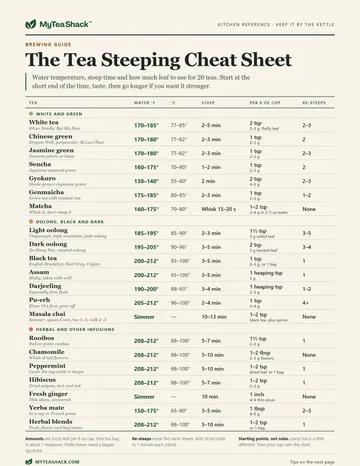
Free printable
The Tea Steeping Cheat Sheet
Water temperature, steep time and how much leaf to use for 20 teas, from sencha to rooibos, on one printable page. Plus five fixes for a bitter cup.